Category: The Making of Japanese Swords
-

Sumihira MANABE demonstration at Rencontres d’Aubrac
-
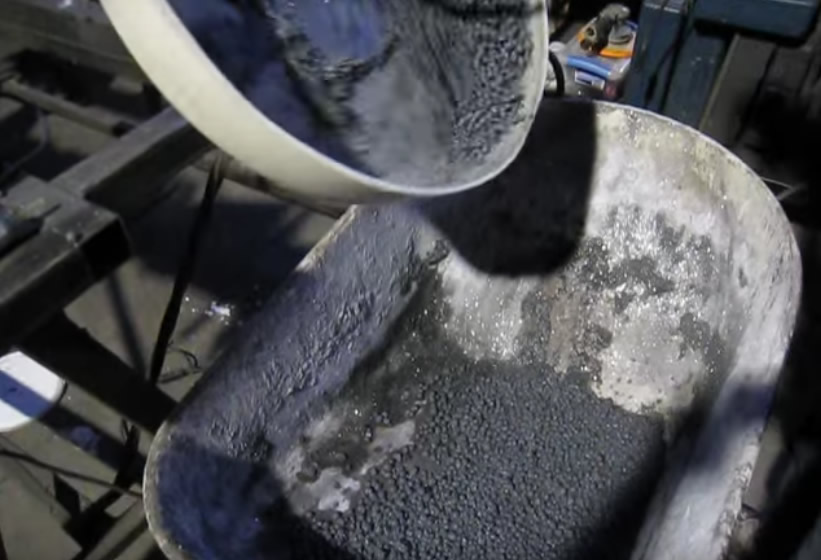
Iron smelting pellet maker
A small scale high-furnace is operated at Les Forges de Montréal. It is supplied with charcoal and iron ore. In order to improve the furnace’s efficiency, the ore is prepared into pellets. This ingenious tool facilitates the making of those pellets.
-

Teko-zuke
The teko is the tool — a plain bar — that is used to hold the steel block to be forged. The said block is welded onto one end of the teko. This video shows Manabe Sumihira performing such a forge weld.
-

In preparation for tanren
Japanese traditional sword making is bound to the use of certain types of steel which are the product of ancient manufacturing processes. Without the use of such steels, it wouldn’t be traditional japanese sword making anymore. It is not possible to use those steels such as they come from their maker. In the old days…
-
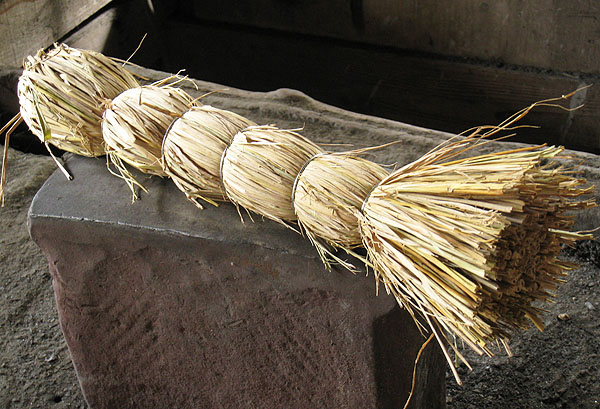
How to make a te-bōki
Useful hand-held straw brush and tool The te-bōki (手箒 lit. “hand-broom”) are extremely useful tools during forging to hold down hot work, brush away scale, push back hot coals, hit apprentices (!), etc. At first sight they look pretty simple, but their making requires a bit of practice so that they become tough and rigid…
-

Making aku – Fabrication d’aku
Aku, or charred straw, is used as a coating when forging traditional steels at very high temperatures in the processes of japanese swordsmithing. The charred straw is both a light source of carbon for the steel, as well as an anti-oxidizing coating when it liquifies near welding temperature.
-
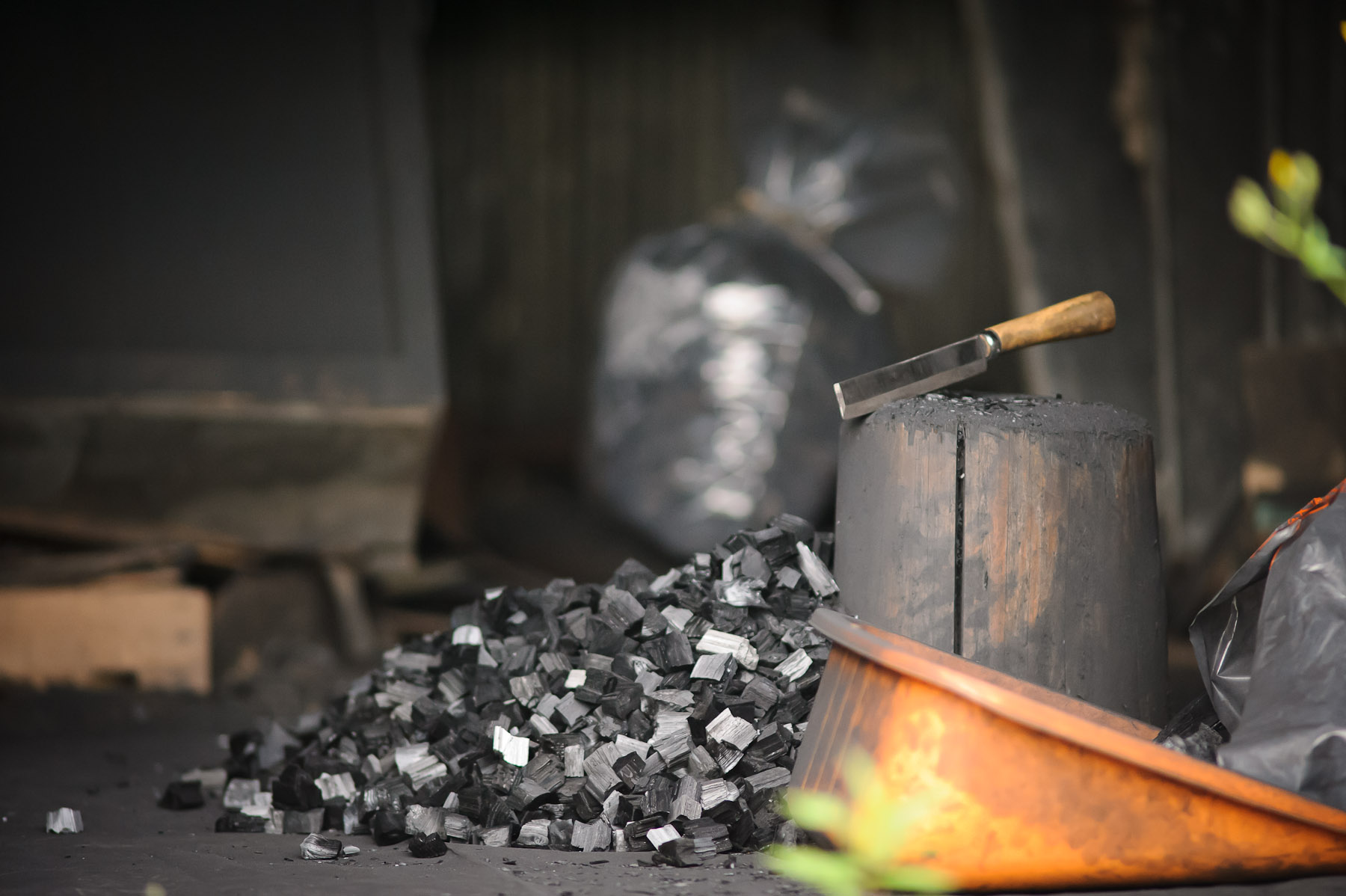
Sumi-kiri san nen…
Sumi-kiri, the elaborate cutting of charcoal by apprentices is said to take three years (san nen) to assimilate. I’m obviously a slow learner for it’s been over five years and my charcoal is far from all right. But what’s all the fuss?! If you ever tried shoveling gravel, you’ll have noticed it’s a lot easier…
-
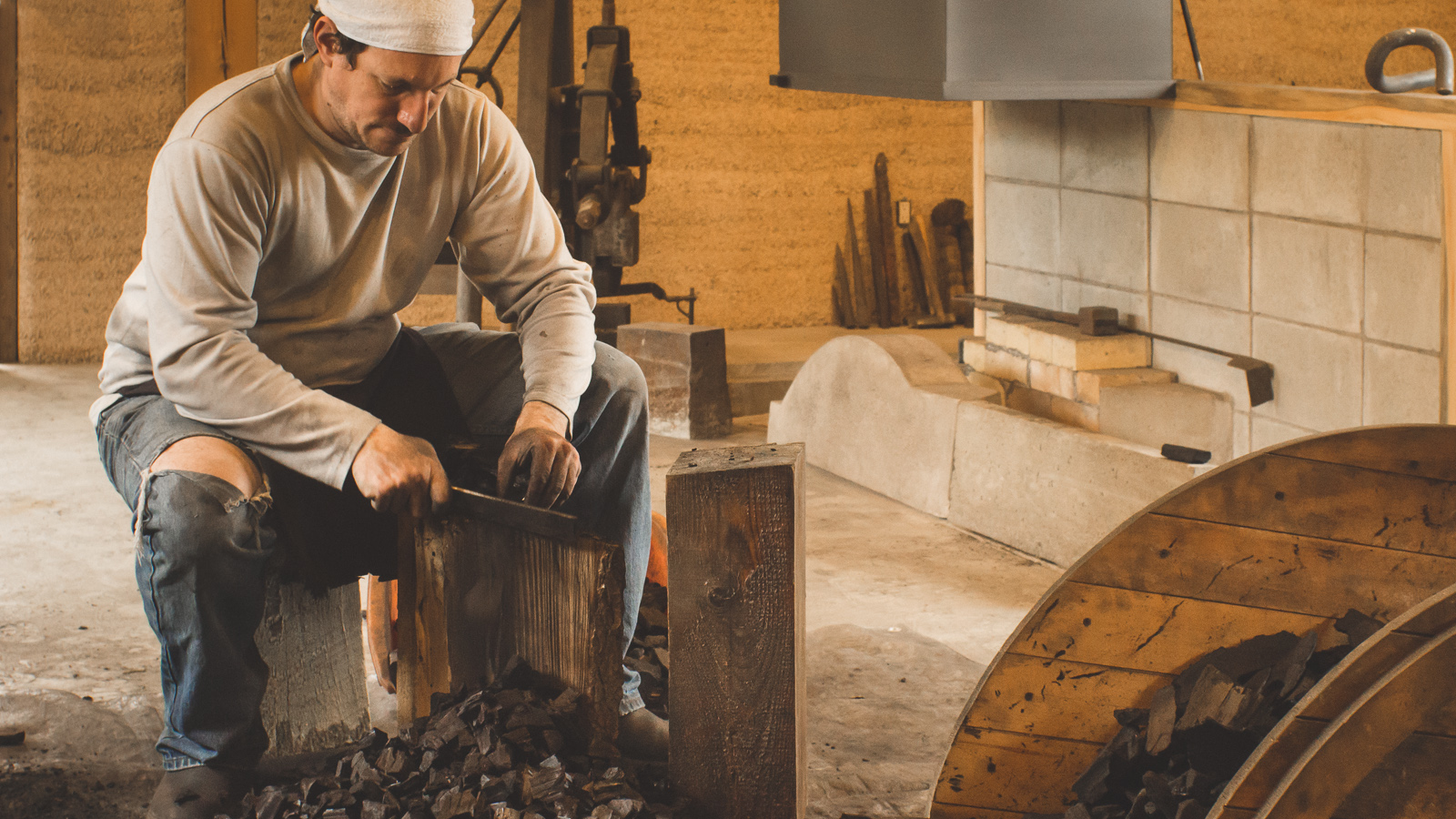
Sumi-kiri – Charcoal cutting
Sumi-kiri, the cutting of the charcoal by japanese swordsmith apprentices, as poorly performed by me. In this video, one strike out of ten is ok, while all others made me frown… size wrong.. size wrong.. swing wrong.. size wrong.. strength wrong.. size wrong.. wrong angle.. and so on. It is said it takes three years…
-

More than a year without updating Soulsmithing
A bit of news… It’s been over a year since I properly updated Soulsmithing. I wonder if that’s a good sign or not: I was once told that if I was actually training enough, I shouldn’t be having enough time to “play” with a Web site… The last two years have had their share of…
-
Gallery: The Sumihira Zuku-Oshi Tatara
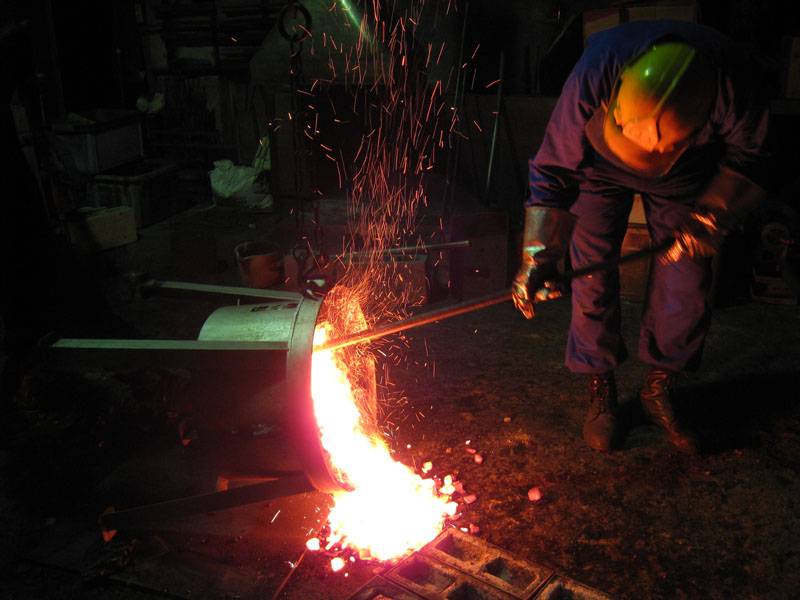
A week in images at Manabe Sumihira’s zuku-oshi tatara Mr.Manabe uses akome-satetsu, a type of complex iron ore that includes various types of oxides (Fe3O4, Fe2O3, FeO), a considerable amount of silica oxide as well as other important impurities. Most iron ores available for industrial purposes are closer to what is called masame-satetsu in Japan,…
-

Home-made steel: A week at Manabe Sumihira’s zuku-oshi tatara
Most of those who know about the tatara – the traditional Japanese iron ore reduction and steel smelting furnace – think of actually only one type called the kera-oshi tatara. There exist indeed two main types to which in the West we would refer to as low-furnace and high-furnace. If the low-furnace, or kera-oshi tatara,…
-
Manabe Sumihira Zuku-Oshi Tatara
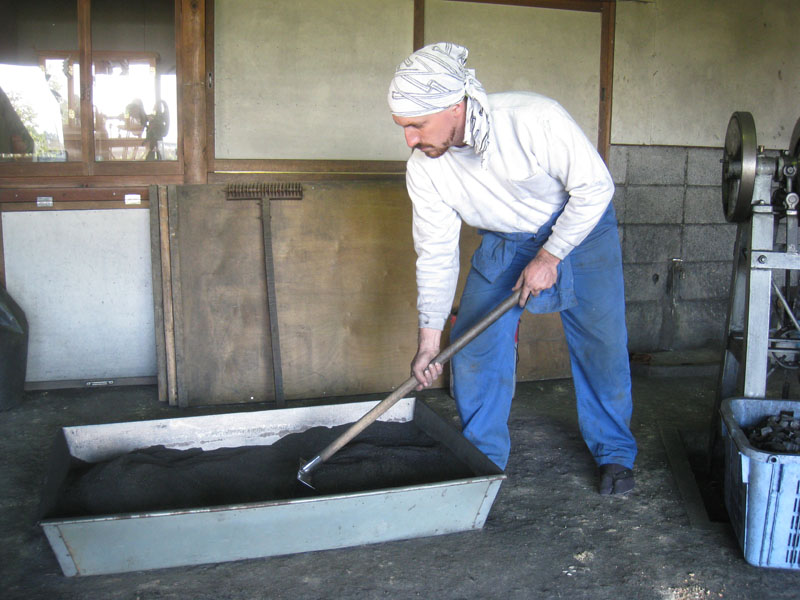
A week spent at Japanese swordsmith Manabe Sumihira’s helping out with the operation of his tatara. Manabe chose to operate a pig iron smelting zuku-oshi tatara instead of the more commonly known kera-oshi. The pig iron decarburizing process can be seen here (in Japanese, click on various links): http://www.eonet.ne.jp/~sumihira/19sageba/00sage/00sage%20.html More details are available on these…
-

Kiyota JIROKUNIETSU at the Forge
-

Forging Japanese Swords
This site is a window into the world of Traditional Japanese Swordsmithing through the experience of Apprentice Pierre Nadeau and his mentors. « A little learning is a dangerous thing; drink deep, or taste not the Pierian spring: these shallow draughts intoxicate the brain, and drinking largely sobers us again. » Alexander Pope (1688 –…