Category: Craftsmen
-
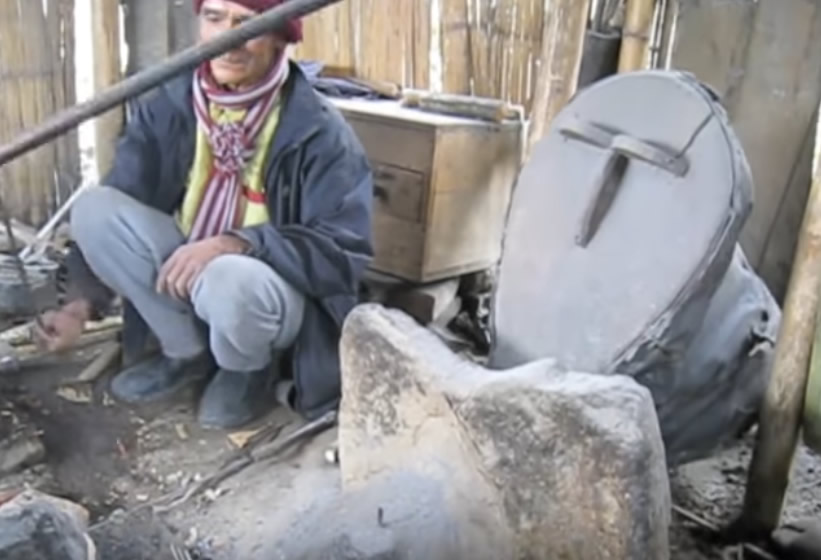
Nepalese village blacksmith
In early April 2011 I had the opportunity to visit a traditional village blacksmith while in the Fikkhal area, Eastern Nepal. In both India and Nepal craftsmen are still considered as the lowest cast and I could see this man lives simply. He was extremely peaceful and very pleasant to be around. He produces mostly…
-
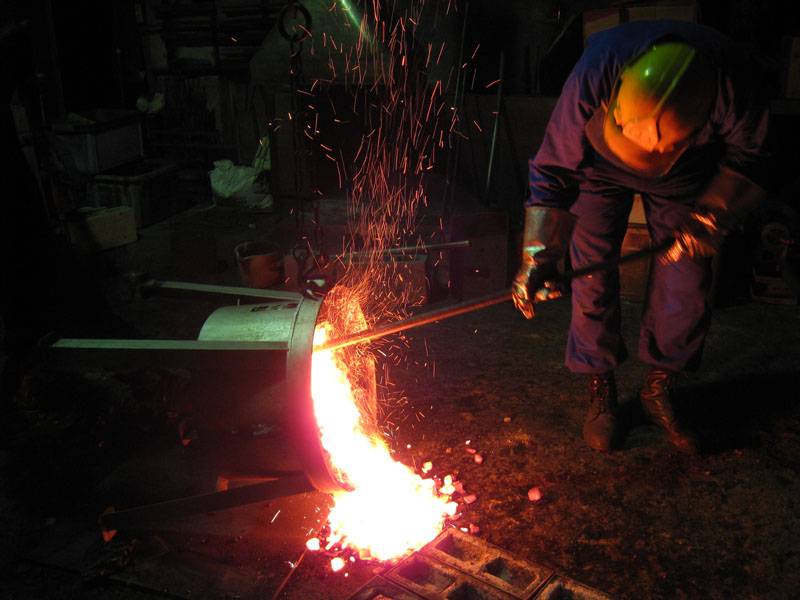
Gallery: The Sumihira Zuku-Oshi Tatara
A week in images at Manabe Sumihira’s zuku-oshi tatara Mr.Manabe uses akome-satetsu, a type of complex iron ore that includes various types of oxides (Fe3O4, Fe2O3, FeO), a considerable amount of silica oxide as well as other important impurities. Most iron ores available for industrial purposes are closer to what is called masame-satetsu in Japan,…
-

Home-made steel: A week at Manabe Sumihira’s zuku-oshi tatara
Most of those who know about the tatara – the traditional Japanese iron ore reduction and steel smelting furnace – think of actually only one type called the kera-oshi tatara. There exist indeed two main types to which in the West we would refer to as low-furnace and high-furnace. If the low-furnace, or kera-oshi tatara,…
-
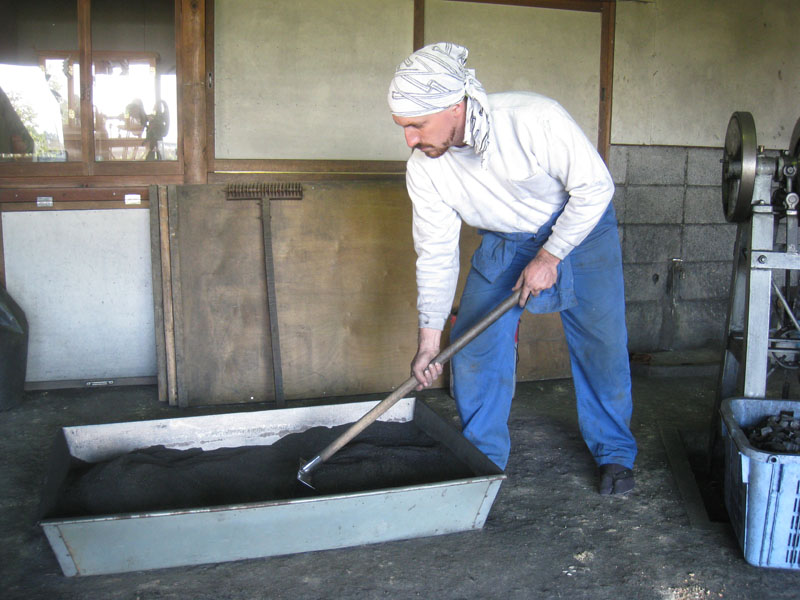
Manabe Sumihira Zuku-Oshi Tatara
A week spent at Japanese swordsmith Manabe Sumihira’s helping out with the operation of his tatara. Manabe chose to operate a pig iron smelting zuku-oshi tatara instead of the more commonly known kera-oshi. The pig iron decarburizing process can be seen here (in Japanese, click on various links): http://www.eonet.ne.jp/~sumihira/19sageba/00sage/00sage%20.html More details are available on these…
-
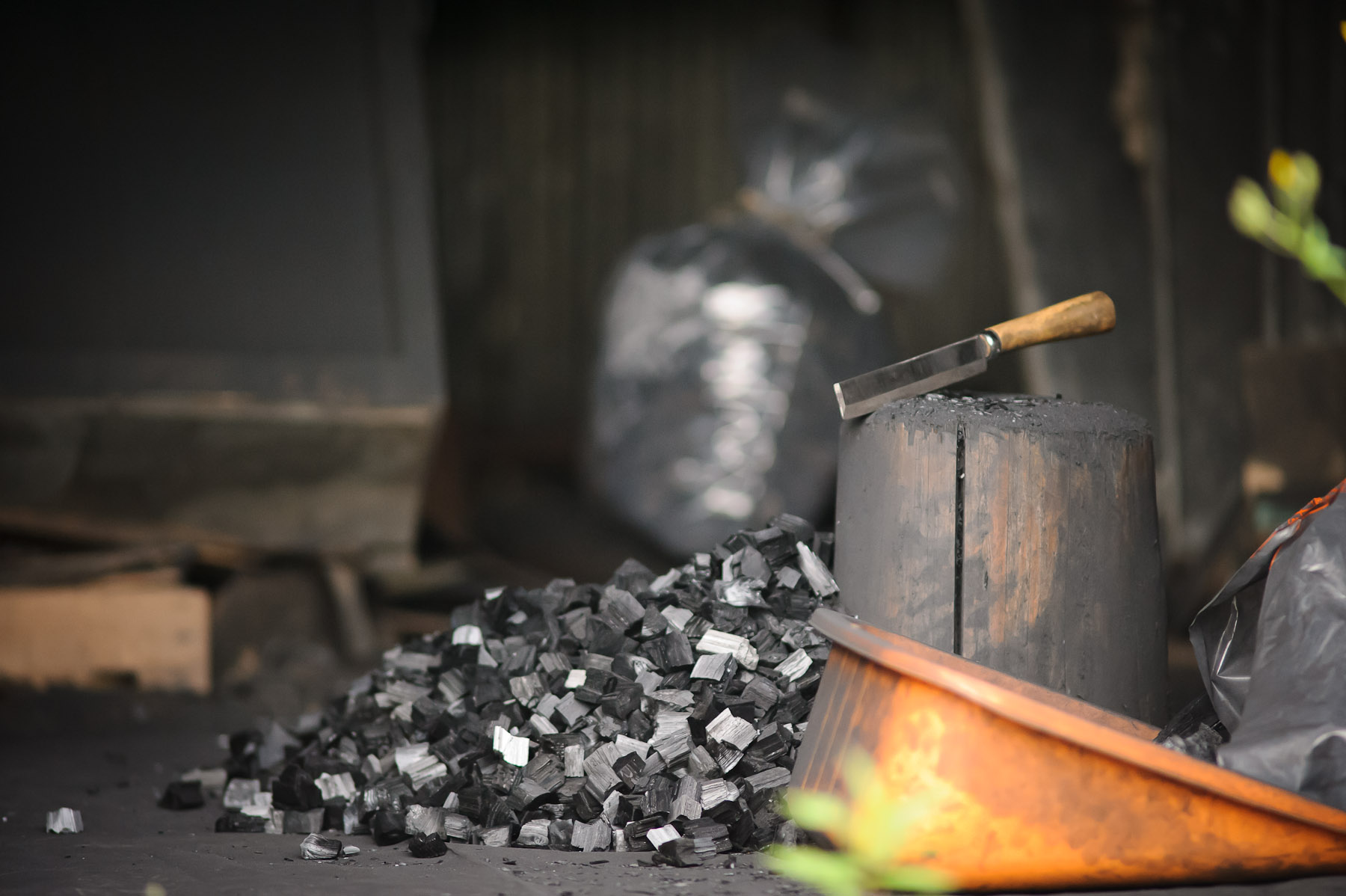
How to become a swordsmith apprentice in Japan
The number of individuals who wish to become a heir in the tradition of Japanese swordsmithing by undertaking traditional apprenticeship in Japan has grown considerably. This is probably due to the internationalization of communications, giving a feeling that the very remote and peculiar culture of the Japanese sword is now more accessible, and it probably…
-

Japanese Swords by Kiyota Jirokunietsu
All material presented on this page is copyrighted. 2007: Sue-Bizen Sukesada Yosozaemon-style short katana The swordsmith signature Sukesada was used by a considerable number of smith spanning the later part of the Muromachi period (1392-1573) through the first third of the Edo period (1600-1867). It is generally recognized that Sukesada Yosozaemon is one of the…