This site is a window into the world of Traditional Japanese Swordsmithing through the experience of Apprentice Pierre Nadeau and his mentors as well as a resource for those wishing to learn more directly from the source.


-
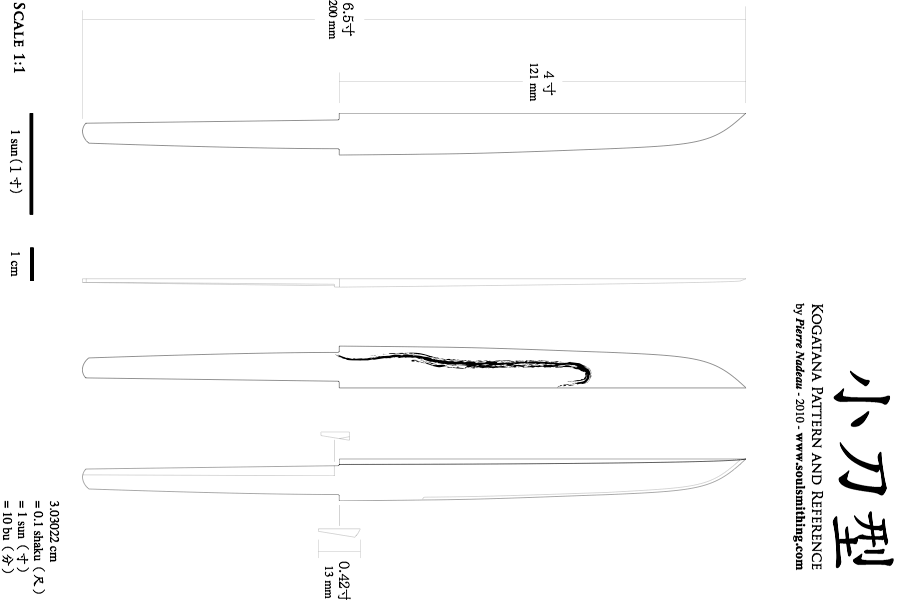
Kata – Sword Patterns: Kozuka – Kogatana
Kozuka – Kogatana These pocket knives were utilitarian first and foremost. They were inserted into a sword scabbard’s side, through the guard. Kozuka (small tsuka) refers to the hilt of the knife, whereas kogatana (small katana) refers to the actual knife itself. Download this PDF file which provides detailed measurements of a classic kogatana. (right-click…
-
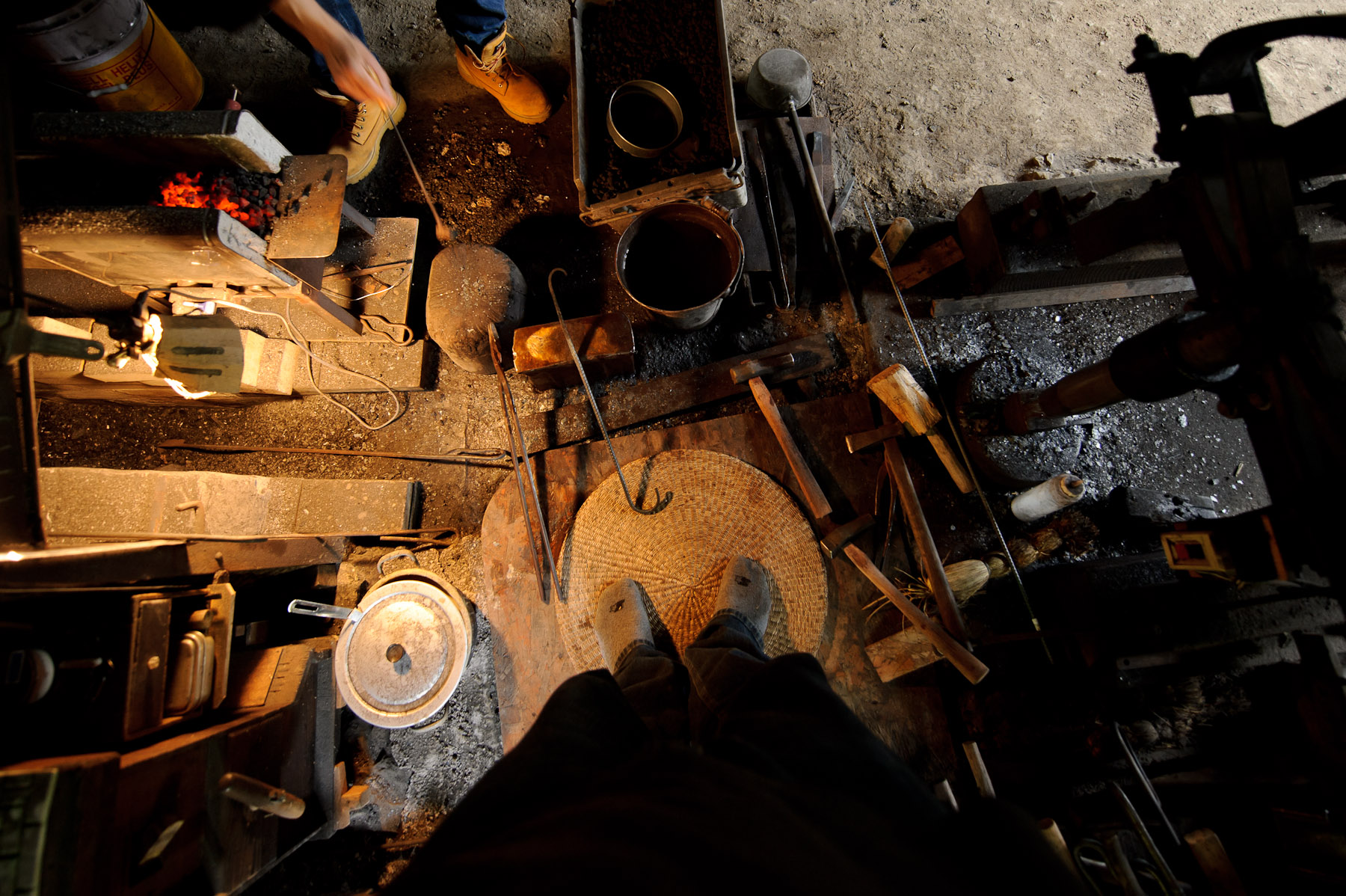
A tour of the forge
Wishing you a truly successful new year! This morning I fought my way out of my futon, and into winter. It was three degrees. Inside. The pipes were frozen. No water. They keep telling me “Aren’t you tough?! It’s much colder in Canada!“. “Yeah, but we have heating in our insulated houses,” I always reply.…
-

Katana-kaji – Forge
This is a tour of my smithy here in Shimizu, Japan. The smithy has over a century of recorded history as the workplace of a village blacksmith. Only the forge itself has been refitted for sword making.
-

Gaijinto: Happy New Year and a Real Treat
“Pierre Nadeau is an incredible Canadian who is probably the only westerner swordsmith apprentice in Japan at this time…” Original Link
-

More than a year without updating Soulsmithing
A bit of news… It’s been over a year since I properly updated Soulsmithing. I wonder if that’s a good sign or not: I was once told that if I was actually training enough, I shouldn’t be having enough time to “play” with a Web site… The last two years have had their share of…
-

Japanese style miniature forge – Mini-hodo
The forge used by swordsmiths in Japan is inconvenient for delicate work because it is deep and remote from the smith (it's made for long things) Some smiths therefore design a miniature forge they can put away and take out as they need. I checked several designs and built this one on wheels, with its…
-
The Making of a Sword – Blog Project
The Soulsmithing Web site has been up for years now, but it’s always been my dream to publish a regular newsletter, in the continuation of Kogei, to diffuse as much information on the world of japanese swords, swordsmithing and the culture in general. Editing and publishing a newsletter has proven too much work to fit…
-

Mei-kiri — mei = signature; kiru = to cut
Mei-kiri — mei = signature; kiru = to cut Mei-kiri is the action of “cutting” or engraving a signature onto a finished japanese sword tang. The same expression is also used in other trades.
-

Terres d'échanges Japan Trailer
An interesting project elaborated by director Mélanie Dion. Each week presents a Québécois living in a foreign country, and a National from that country living in Québec, their lives, exchanges, experience.
-

Art of the Samurai: Japanese Arms and Armor, 1156-1868
Art of the Samurai: Japanese Arms and Armor, 1156-1868 Edited by Morihiro Ogawa English – 356 pages – ISBN-10: 0300142056 More than just the catalogue, from the exhibition of the same name held at the Met in 2009, this is one cover-it-all for the samurai arts! Visit this Amazon link for details
-

Québec TV visits Pierre in Japan – Terres d'échanges
A production team mandated by the Canadian province of Québec’s national TV channel, Télé-Québec, visits Pierre for a documentary to be aired at the beginning of 2010. An interesting project elaborated by director Mélanie Dion. Each week presents a Québécois living in a foreign country, and a National from that country living in Québec, their…
-
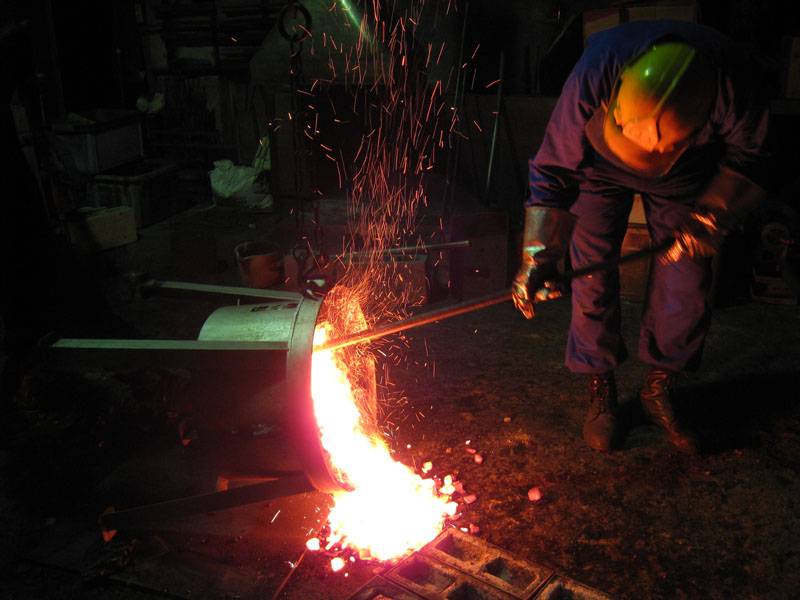
Gallery: The Sumihira Zuku-Oshi Tatara
A week in images at Manabe Sumihira’s zuku-oshi tatara Mr.Manabe uses akome-satetsu, a type of complex iron ore that includes various types of oxides (Fe3O4, Fe2O3, FeO), a considerable amount of silica oxide as well as other important impurities. Most iron ores available for industrial purposes are closer to what is called masame-satetsu in Japan,…
-

Home-made steel: A week at Manabe Sumihira's zuku-oshi tatara
Most of those who know about the tatara – the traditional Japanese iron ore reduction and steel smelting furnace – think of actually only one type called the kera-oshi tatara. There exist indeed two main types to which in the West we would refer to as low-furnace and high-furnace. If the low-furnace, or kera-oshi tatara,…
-
Manabe Sumihira Zuku-Oshi Tatara
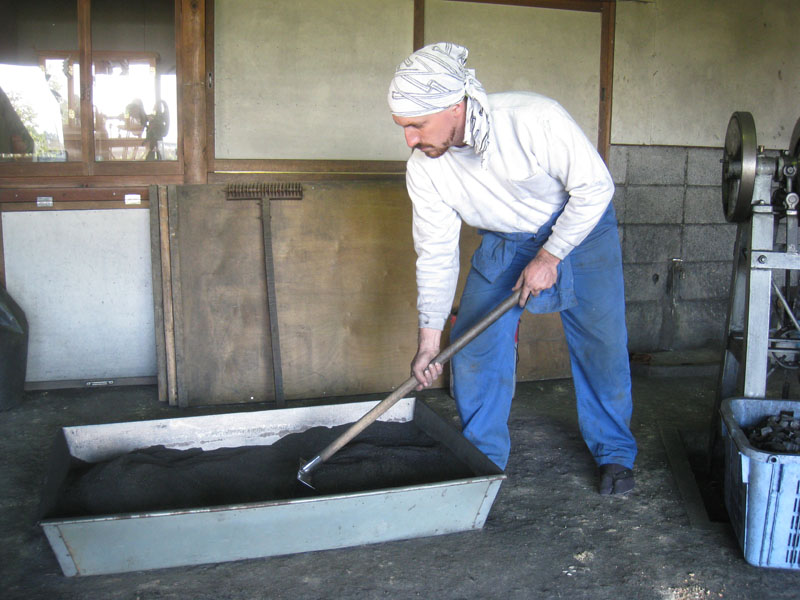
A week spent at Japanese swordsmith Manabe Sumihira’s helping out with the operation of his tatara. Manabe chose to operate a pig iron smelting zuku-oshi tatara instead of the more commonly known kera-oshi. The pig iron decarburizing process can be seen here (in Japanese, click on various links): http://www.eonet.ne.jp/~sumihira/19sageba/00sage/00sage%20.html More details are available on these…
-

NBSK: Nihontō Bunka Shinkō Kyōkai
A new japanese sword organization written by Franz Baldauff [annotated by Pierre Nadeau] Franz is one of the rare Westerners to have studied the Japanese Sword in an academic context, particularly the sword as an art object throughout Japanese history. He is also the author behind the Web site Nihon Tōken, from which this article…